Head-to-Head: Tp Link Re655Be vs Scansnap Ix1300 (Detailed Comparison)
In the evolving landscape of the modern home office, the category of "laptop accessories" has expanded far beyond simple sleeves and cooling pads. Today, a professional laptop setup is only as powerful as the infrastructure supporting it. For many users, this infrastructure relies on two critical pillars: connectivity and digitalization. When looking at the current market for high-end workspace enhancements, two names frequently surface for those seeking to optimize their productivity, albeit for very different reasons. The TP-Link RE655Be and the Fujitsu ScanSnap iX1300 represent the pinnacle of their respective niches—wireless networking and document management.
While one might initially wonder why a Wi-Fi 7 range extender and a compact document scanner are being compared, the answer lies in the "Laptop Lifestyle" and the pursuit of the ultimate remote-work ecosystem. Laptop users are notoriously mobile; they work from kitchens, patios, and home offices. This creates two distinct friction points: losing a stable internet connection as they move away from the router, and the accumulation of physical paperwork that needs to be digitized to maintain a "paperless" mobile workflow. This comparison dives deep into these two productivity powerhouses to help you decide which upgrade is the priority for your laptop-centric setup.
The Connected Hub: TP-Link RE655Be Analysis
The TP-Link RE655Be is not your average Wi-Fi booster. It is one of the first major entries into the Wi-Fi 7 (802.11be) range extender market. For laptop users who have recently invested in high-end machines equipped with Wi-Fi 7 cards, this device is designed to ensure that the massive bandwidth and low latency of the new standard aren't confined to the room where the router sits. It operates on three bands—6GHz, 5GHz, and 2.4GHz—utilizing 320MHz channel width to push data at speeds that were previously only possible with a physical Ethernet cable.
From an editorial perspective, the RE655Be addresses the "dead zone" problem that plagues large homes or apartments with thick walls. For a laptop user, there is nothing more frustrating than having a powerful machine that can handle 4K video editing or complex data modeling, only to be throttled by a weak signal when moving to a more comfortable seating area. The RE655Be utilizes Multi-Link Operation (MLO), a hallmark of Wi-Fi 7, allowing the laptop to send and receive data across different frequency bands simultaneously. This results in significantly increased throughput and reduced jitter, which is essential for video conferencing and cloud-based collaborative tools.
The build quality is substantial, featuring a plug-in design with external antennas that can be adjusted to maximize signal reception. It also includes a 2.5 Gbps wired port, which is a game-changer for those who want to "dock" their laptop at a secondary desk and enjoy ultra-fast wired speeds without running a cable back to the main router. It is a device built for the future, anticipating a world where gigabit internet is the baseline and multi-gigabit needs are common.
Pros and Cons of the TP-Link RE655Be
- Ultra-Fast Wi-Fi 7 Support: Offers future-proofing for the latest laptop models, delivering speeds that far exceed Wi-Fi 6E.
- Multi-Link Operation (MLO): Enables simultaneous data transmission over multiple bands for better stability and lower latency.
- 320 MHz Channels: Doubles the bandwidth compared to previous standards, allowing for massive data transfers.
- 2.5 Gbps Ethernet Port: Provides a high-speed wired backbone for laptop docks or desktop PCs.
- OneMesh Compatibility: Creates a seamless roaming experience if you already use a TP-Link router ecosystem.
- High Price Point: As a Wi-Fi 7 device, it carries a premium price tag compared to older Wi-Fi 6 extenders.
- Physical Size: The unit is quite large and may block adjacent power outlets in a standard wall socket.
- Diminishing Returns: Users with older laptops that do not support Wi-Fi 7 will not see the full benefit of this technology.
The Paperless Producer: ScanSnap iX1300 Analysis
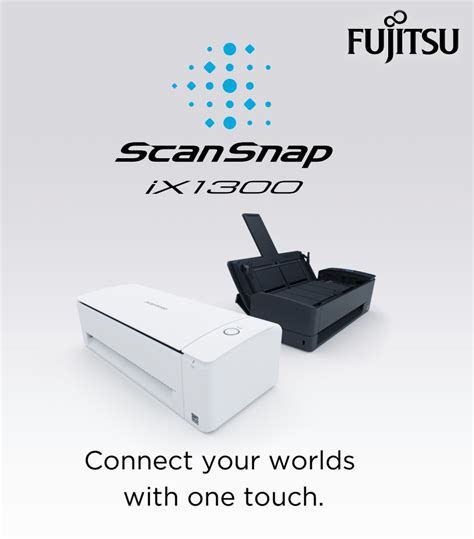
Turning the focus to document management, the Fujitsu (Ricoh) ScanSnap iX1300 is often cited as the "Swiss Army Knife" of scanners for laptop users. Unlike the bulky flatbed scanners of the past, the iX1300 is designed with a radical compact footprint. It is built for the user who values desk real estate but cannot compromise on the ability to digitize receipts, business cards, and multi-page reports. For the mobile professional, the iX1300 represents liberation from the filing cabinet.
The standout feature of the iX1300 is its dual-path feeding system. The "U-turn" path allows for high-speed, double-sided scanning of standard documents while keeping the footprint tiny, as the paper exits at the top rather than sliding across the desk. The "Manual Feed" or "Straight Path" is where its versatility shines, allowing users to scan thick items like ID cards, folded documents, or even small envelopes without fear of jamming. This is particularly useful for laptop users who might be scanning expenses from a business trip or digitizing old family photos between work sessions.
Find top-rated Laptops & Computers products at great prices.
Shop Amazon →Integration with laptops is seamless through the ScanSnap Home software. Whether you are using a Windows-based workstation or a MacBook, the software automates the process of naming files, extracting data from business cards, and routing documents directly to cloud services like Google Drive, Dropbox, or Evernote. It connects via Wi-Fi (2.4GHz and 5GHz) or USB. The "instant-on" capability—where the device is ready to scan the moment you open the lid—matches the "pick up and go" nature of laptop computing.
Pros and Cons of the ScanSnap iX1300
- Incredible Space Efficiency: The U-turn path ensures the scanner occupies minimal desk space even during operation.
- Versatile Media Handling: Easily scans standard paper, plastic ID cards, and thick envelopes through the manual feeder.
- Speed: Capable of scanning 30 pages per minute, making short work of long contracts or stacks of mail.
- Simplified Software: ScanSnap Home is highly intuitive, automating the categorization and filing process.
- Wireless Connectivity: Scan directly to your laptop or mobile device without needing a USB cable.
- Resolution Limits: While perfect for documents, its optical resolution may not satisfy high-end professional photographers for photo restoration.
- Sheet Capacity: The automatic document feeder (ADF) holds 20 sheets, which might be low for users digitizing entire archives at once.
- Power Requirements: Unlike some portable scanners, it requires an external power brick and is not USB-bus powered.
Head-to-Head Comparison Table
To better understand how these two devices impact a laptop-based workspace, we can compare their technical specifications and primary utility side-by-side.
| Feature | TP-Link RE655Be | ScanSnap iX1300 |
|---|---|---|
| Primary Category | Networking / Wi-Fi Extension | Document Digitization / Scanner |
| Core Technology | Wi-Fi 7 (802.11be) | Cis (Contact Image Sensor) |
| Connection to Laptop | Wireless (Wi-Fi 7/6/5) & 2.5G LAN | Wi-Fi (ac/n) & USB 3.2 |
| Max Speed | Up to 9214 Mbps (Combined) | 30 ppm / 60 ipm (Grayscale/Color) |
| Form Factor | Wall Plug with Antennas | Compact Desktop (U-turn Path) |
| Key Benefit | Eliminates internet lag/dead zones | Eliminates physical paper clutter |
| Best Case Use | High-bandwidth video calls & gaming | Expense tracking & records management |
Buying Guide: Which One Overhauls Your Workflow?
Choosing between the TP-Link RE655Be and the ScanSnap iX1300 isn't about which device is "better" in an absolute sense; it's about identifying where your laptop workflow is currently leaking productivity. To make the right choice, consider the following environmental factors.
Evaluating Your Network Bottlenecks
If you find yourself tethered to a specific corner of your home because the "Wi-Fi is bad everywhere else," the TP-Link RE655Be is the logical priority. Laptop users are increasingly reliant on the cloud. Whether you are pulling large assets from a NAS, syncing multi-gigabyte project folders on OneDrive, or participating in high-definition video presentations, the quality of your wireless airwaves is your primary limiting factor. The RE655Be is especially critical for those who have upgraded to a Wi-Fi 7 router but find the signal doesn't reach their preferred workspace. It ensures that your expensive laptop's networking capabilities aren't being wasted.
Evaluating Your Paperwork Friction
Conversely, if your "laptop office" is cluttered with stacks of mail, business cards, and signed contracts that you "need to get to eventually," the ScanSnap iX1300 will offer a more immediate psychological and organizational boost. The friction of having to "go to the scanner" or deal with flatbed lids often results in people avoiding digitization. The iX1300 removes that friction. Its compact nature means it can sit right next to your laptop, allowing you to feed in a document the moment it lands on your desk. For freelancers, accountants, or administrators, the time saved in filing and searching for digital PDFs versus physical paper is immense.
The Real-World Use Case: The Hybrid Professional
Consider a professional who works from home three days a week. They use a modern laptop with a high-resolution screen and a fast processor. While working, they need to join Zoom calls and occasionally scan signed client NDAs. If the Zoom call drops every time the microwave is on or they move to the dining table, the TP-Link RE655Be is the solution to that specific pain point. If their desk is a mess of receipts that they need for tax season, the iX1300 is the tool that cleans up their life.
Find top-rated Laptops & Computers products at great prices.
Browse Now →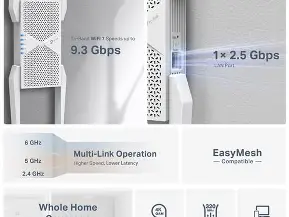
Furthermore, consider the longevity of the investment. The TP-Link RE655Be is a "set it and forget it" device that improves every wireless device in the house, from your laptop to your smartphone. The ScanSnap iX1300 is a "high-touch" device that requires active participation but provides a direct service in organizing your information. Buyers care about reliability and ease of use; both devices score highly here, with TP-Link's Tether app and ScanSnap's Home software being leaders in their respective industries for user-friendly interfaces.
Advanced Connectivity vs. Advanced Organization
When we look deeper into the technology, the RE655Be represents the "Highway" while the iX1300 represents the "Cargo." A laptop user needs a fast highway (internet) to transport their cargo (data/documents). If your highway has potholes (dead zones), you need the TP-Link. If you have too much cargo sitting in your warehouse (filing cabinet) and no way to put it on the highway, you need the ScanSnap.
One detail often overlooked is the power of the 6GHz band in the RE655Be. In crowded apartment complexes where 2.4GHz and 5GHz bands are congested by neighbors' routers, the 6GHz band is like a private lane on the freeway. For a laptop user, this means no interference. On the other side, the iX1300's ability to scan to mobile devices without a PC being turned on is a hidden gem. You can scan a document directly to your phone's ScanSnap Cloud app, which then syncs it to your laptop, simplifying the workflow further.
Conclusion
The TP-Link RE655Be and the ScanSnap iX1300 are both elite additions to a laptop user's arsenal, focusing on two very different aspects of productivity. The RE655Be is an investment in infrastructure, providing the raw speed and stability required for the next generation of wireless computing. It is the ultimate choice for those who demand the fastest possible connection and want to future-proof their home with Wi-Fi 7 technology. Its ability to extend a multi-gigabit network ensures that your laptop remains a truly mobile powerhouse anywhere in the building.
On the other hand, the ScanSnap iX1300 is an investment in efficiency and organization. It tackles the age-old problem of paper clutter with a modern, space-saving design and intelligent software that makes digitization effortless. For users who deal with high volumes of documents and want a clean, minimalist workspace, the iX1300 is arguably the most useful peripheral a laptop owner can buy. Whether you choose the path of ultra-fast connectivity or the path of seamless digitization, both devices represent a significant upgrade over standard consumer-grade alternatives, ensuring your professional laptop setup remains capable, organized, and ready for any task.