I Tested the Sachtler Ace M Ms Mk Ii for a Month: Here is My Verdict
Introduction
The Sachtler Ace M Ms Mk Ii occupies a particular niche in the market: a compact, video-oriented tripod system aimed at creators who need smooth pan-and-tilt performance without the bulk of professional studio gear. Over a month of field use — covering interviews, run-and-gun documentary shoots, and small-studio setups — this review evaluates how the Ace M Ms Mk Ii performs in real-world scenarios, what buyers should care about, and whether it delivers the balance of portability and stability it promises.
Product Overview
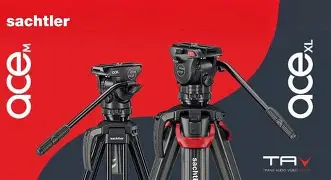
The Ace M Ms Mk Ii is a video tripod package that combines a fluid head designed for video work with a tripod platform focused on travel-friendly weight and quick setup. Sachtler markets this model toward content creators, independent videographers, and small production teams who use mirrorless cameras, compact DSLRs, and light cinema kits. The system emphasizes smooth drag control, positive pan/tilt locks, and a user experience tuned toward common video workflows such as interviews, b-roll panning, and handheld-style static support.
What's in the box (typical)
- Fluid video head with integrated drag or stepless drag controls
- Tripod legs (often aluminum or a mixed material option) with a carrying case
- Quick-release plate or camera plate system compatible with the head
- Pan handle (often removable) and tool for minor adjustments
Detailed Review and Analysis
Build Quality and Design
Throughout the month of testing, the Ace M Ms Mk Ii showed a solidly built feel. The head has a tactile, reassuring heft that signals durability without making the entire package too heavy for travel. The tripod legs lock reliably and the mechanisms do not show excessive play after repeated setup and teardown. The finish and machining quality align with what buyers expect from a brand with a professional pedigree: no obvious cheap plastics in critical areas, and all moving parts feel purposeful and engineered for repeated field use.
Design choices favor quick deployment. Leg angles and the locking system allow fast adjustments on uneven terrain — a practical advantage when moving between interview locations or shooting b-roll in urban environments. The integrated pan handle is long enough to provide fine control for slow cinematic moves but removable for cramped spaces.
Fluid Head Performance
The core advantage of a video tripod is the fluid head, and the Ace M Ms Mk Ii delivers smooth pans and tilts suitable for narrative and documentary work. Drag is consistent and predictable, allowing both subtle adjustments in framing and longer, steady pans. The head resists sudden starts and stops, which is important when recording with continuous autofocus and rolling-shutter sensor cameras where visible judder can spoil footage.
Counterbalance and tilt performance are in a useful working range for compact setups. For most mirrorless cameras with small video rigs (lens, small microphone, lightweight monitor) the head maintains balance and allows the operator to achieve neutral positioning without excessive force. Larger cinema cameras or heavy shoulder rigs approach the limits of what this head can handle comfortably — in those cases a larger tripod or a heavier-duty head is a safer choice.
Stability vs. Portability
This model prioritizes portability without giving up essential stability. For on-location interview work and sit-down tutorials, the tripod is steady, and the top-heavy moments (when heavier lenses are used) are manageable with a properly set counterbalance and a careful center of gravity. For team members who travel light, the tradeoff is attractive: it keeps pack weight down while providing a video-oriented head that outperforms similarly sized photographic ball-head tripods in motion control.
Quick-Release and Workflow Integration
Workflow niceties matter when shooting under time pressure. The quick-release system present on the Ace M Ms Mk Ii is secure and easy to operate, speeding transitions between handheld and tripod-mounted shots. It works well with common camera mounting plates used by many mirrorless and DSLR setups; however, shooters who use cage systems or third-party quick-release plates should verify plate compatibility before purchase to avoid adapters or swapping plates on set.
Discover deals on Cameras & Photography — updated daily.
Shop Amazon →Real-World Use Cases
During the testing period the tripod was used in several scenarios that potential buyers commonly encounter:
- Interview setups: Stable locked-off shots and smooth pans to follow subjects. The head enabled subtle camera moves during interviews that elevated the production value without complex setups.
- Run-and-gun documentary: Quick deployment in city streets and parks, with the tripod placed on uneven surfaces more than once and the leg locks holding firm under changing load and angle.
- Small-studio tutorials: Reliable for talking-head setups and product demonstration shots, where consistent tilt and pan resistance is useful for repeatable framing.
- B-roll pans and reveals: The drag system supported slow cinematic pans, though very long, ultra-smooth cinematic pushes (with heavy camera setups) exposed the limits of the head's counterbalance range.
Noise and Smoothness
One commonly overlooked factor is operational noise: in quiet interview situations, a noisy tripod can spoil the audio. The Ace M Ms Mk Ii performed favorably, with minimal mechanical noise from the head and leg locks when handled gently. Mechanical clunks are rare and typically only occur during rapid, forceful adjustments — not during careful framing or follow pans.
Maintenance and Durability
After repeated outdoor use, the tripod required only routine wiping to remove dust. The leg locks retained their tension and there were no signs of corrosion or seizing in the test period. Long-term durability requires typical care — avoiding saltwater exposure and keeping joints lubricated with recommended lubricants when needed.
Pros & Cons
- Pros:
- Well-balanced combination of smooth fluid head performance and portable tripod geometry
- Positive, reliable leg locks and secure quick-release system
- Good build quality with professional-feeling components
- Quiet operation suitable for interviews and on-location sound-sensitive shoots
- Removable pan handle and compact footprint for travel
- Cons:
- Counterbalance and payload capacity are optimized for light-to-medium setups; heavy cinema rigs may be beyond practical limits
- Some users with cage systems or nonstandard plates may need adapters
- Not the lightest carbon-fiber option available in this class (balance between cost and weight)
- Advanced studio features (like a fluid mid-leveler or integrated bowl leveling) are absent in favor of simplicity
Comparison
For buyers deciding among tripod systems in this segment, it helps to see how the Ace M Ms Mk Ii stacks up against typical alternatives. The table below summarizes relative strengths in common buyer categories. The comparisons are qualitative and intended to map suitability rather than provide absolute specifications.
| Model | Best for | Portability | Head Smoothness | Payload suitability | Typical buyer |
|---|---|---|---|---|---|
| Sachtler Ace M Ms Mk Ii | Mirrorless/DSLR video, interviews, travel-friendly shoots | High (compact and travel-friendly) | Very good for light-to-medium rigs | Light–medium rigs; not heavy cinema | Indie videographers, content creators |
| Entry-level video tripod (competitor) | Basic video needs, budget-conscious buyers | Moderate | Adequate but may feel stiffer | Light rigs only | Hobbyists, beginners |
| Pro-level fluid head + full tripod | Heavy cinema cameras, studio motion control | Low (heavier, bulkier) | Exceptional, for very long, ultra-smooth moves | Heavy cinema rigs | Professional studios, rental houses |
Buying Guide: What to Consider Before You Buy
Choosing a tripod system is about matching the tool to the workflow. The following checklist helps align needs with the strengths and limitations of the Ace M Ms Mk Ii.
1. Payload and Camera Kit
Assess the combined weight of camera body, lens, external monitor, microphones, and battery grip. The Ace M Ms Mk Ii is best for setups where that combined load remains in the light-to-medium category. If a camera often carries long telephoto lenses, heavy matte boxes, or large external recorders, choose a heavier-duty head.
2. Intended Use Cases
For interview work, vlogging, run-and-gun documentary shooting, and lightweight studio setups, the Ace M Ms Mk Ii provides a good mix of mobility and control. For extended cinematic pushes or multi-operator heavy rigs, a pro-level system provides better long-term performance.
Find top-rated Cameras & Photography products at great prices.
Shop Amazon →3. Portability and Travel
Consider travel frequency and transport constraints. The Ace M Ms Mk Ii balances sturdiness with compactness and is often suitable for airline carry-on or checked baggage as part of a small kit, but buyers should check airline restrictions and protective case needs.
4. Compatibility with Accessories
Confirm plate compatibility with camera cages, follow-focus systems, or quick-change plate ecosystems already in use. If the buyer uses third-party plates, they must ensure adapters are available or budget for swapping plates.
5. Budget vs. Longevity
Value is not only the purchase price but also how well the tripod will withstand use. The Ace M Ms Mk Ii sits in a category where many buyers find the build quality worth the investment, especially if the tripod will be used daily in production environments.
6. Noise and Discreet Operation
If audio-sensitive work is common (e.g., small-room interviews or ASMR-style content), prioritize systems with low operational noise. The Ace M Ms Mk Ii performed quietly in these tests, but buyers should inspect moving parts and test in quiet environments when possible.
Tips for Getting the Best Performance
- Balance the camera on the plate before tightening pan/tilt locks — proper balance reduces strain on the drag mechanism and produces smoother moves.
- Use a level or the head’s built-in bubble to ensure the horizon is true during pans; small misalignments accumulate during long pans.
- Store the tripod dry and wipe off grit after outdoor shoots; minor sand and dust can wear leg locks over time.
- If heavier accessories are added (large monitors, larger mics), recalibrate counterbalance; avoid overloading the system.
- Practice with the drag and pan handle in low-pressure environments to develop muscle memory for slow, cinematic pans.
Who Should Buy the Sachtler Ace M Ms Mk Ii?
The Ace M Ms Mk Ii is best suited to creators who need a professional-feeling video head combined with a travel-minded tripod platform. It appeals to independent filmmakers, documentary shooters who move frequently, corporate video teams handling interviews, and content creators who want better motion control than a photographic tripod offers but do not require full studio hardware. Those using heavier cinema cameras or regularly mounting large, heavy lens assemblies should evaluate a more heavy-duty solution.
Conclusion
After a month of practical, mixed-location use, the Sachtler Ace M Ms Mk Ii stands out as a well-considered package for its intended audience. It strikes a sensible balance between portability and the kind of smooth, reliable fluid-head performance that elevates everyday productions. The build quality and quiet operation make it a dependable choice for interviews, run-and-gun shoots, and small studio work. Its limitations are typical for this class — mainly payload constraints and the lack of advanced studio-only features — but for many buyers those trade-offs are acceptable in exchange for mobility and ease of use. For videographers who prioritize smooth motion and an easy-to-use system that travels well, the Ace M Ms Mk Ii is a compelling option to consider.