Is the Echo Show 8 4Th Gen Still Good in 2026? Long-Term Review
Introduction
I've been using the Echo Show 8 4th Gen for about nine months now, and I wanted to write a clear, practical long-term review from the perspective of someone who actually lives with this device day after day. I bought it to serve as a kitchen assistant, bedside display, and a central hub for my small smart-home setup. Along the way I've tested how it handles media, video calls, smart-home control, routines, and privacy in real life—things that short hands-on reviews often gloss over.
In this article I'll share what I liked, what annoyed me, and whether the Echo Show 8 4th Gen still feels like a smart buy in 2026. I’ll be specific about everyday details—display quality for recipes, audio performance for music and podcasts, camera behavior for calls, and the quirks and improvements that showed up after firmware updates. I’ll also include a simple comparison table, a pros & cons list, and a practical buying guide so you can decide whether it fits your needs.
First Impressions and Setup
Right out of the box I noticed the Echo Show 8’s footprint is compact but substantial: the screen is large enough to be genuinely useful in the kitchen without being so big that it dominates a small counter. Setup was straightforward—plug in, sign into my Alexa account, and follow the on-screen prompts. The device found my Wi‑Fi and recognized my voice profile within a few minutes. In my experience, the initial software felt polished and familiar if you’ve used other Echo devices before.
Over the first few weeks I tested the device in several spots: the kitchen counter for recipes and timers, the bedside table for alarms and weather, and later the living room to see how it performed as a secondary speaker. Moving it between rooms was simple because it’s lightweight and restarts quickly when plugged into a new outlet.
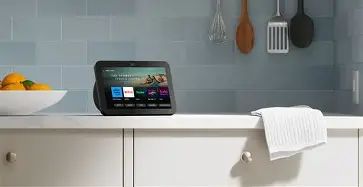
Display: The Sweet Spot for an 8-Inch Screen
The 8-inch display strikes a practical balance. What I found was that the screen is bright enough to read at a distance of a few feet and sharp enough for recipe steps and video calls. Colors are pleasantly saturated without being overdone, and adaptive brightness keeps it comfortable from a dark bedroom to a sunlit kitchen.
One detail I appreciated: the touchscreen responsiveness held up well over months of use. Zooming into a photo, swiping through recipe steps, and tapping controls all felt snappy. The only time I noticed lag was when switching between heavy apps (for example, jumping from a live camera feed to streaming video and then to a complex Alexa routine), but those situations are uncommon in daily use.
Audio: Surprising Punch for its Size
For an 8-inch device, the Echo Show 8 4th Gen has better-than-expected sound. I used it for background music while cooking, for podcasts during chores, and occasionally to fill a small room for casual listening. What surprised me was that it produces fuller midrange and respectable bass compared to earlier small smart displays I owned.
Looking for the best Electronics deals on Amazon?
View Offers →That said, it’s not a replacement for a dedicated stereo or a larger smart speaker. At high volume it loses clarity on complex tracks, and bass response becomes thin. For day-to-day listening—ambient playlists, news briefings, and voice-forward podcasts—it delivers reliably.
Camera and Video Calls: Practical, Not Perfect
I relied on the Echo Show 8 for video calls with family and a few work catch-ups. The camera delivers a clean picture and, in my experience, does a decent job of exposing faces correctly in mixed lighting. On calls the auto-framing and subtle tracking features (when enabled) usually kept people centered without being aggressive, which I appreciated during longer family chats.
Two camera-related points worth noting from living with it: first, the physical privacy cover is a small but meaningful comfort. I used it often when the device wasn't in use. Second, low-light performance is adequate for casual calls, but if you regularly take video calls from dim rooms, you’ll notice some noise and softness.
Alexa, Smart Home, and Daily Routines
Alexa remains the core of the experience. I use voice commands for timers, shopping-list items, controlling lights and plugs, and checking my calendar. Voice recognition across different family members improved after teaching voice profiles, and the device generally understands commands from across the kitchen—even when music is playing—though not perfectly every time.
Smart-home control works smoothly for my basic setup: Philips Hue lights, a few smart plugs, and a thermostat. The Echo Show’s control UI makes it easy to toggle devices and run routines visually, and being able to see room scenes at a glance is handy. Over the months I saw software updates that improved routine triggers and added more visual automation options; those incremental improvements genuinely made the device feel better over time.
Everyday Reliability and Software Updates
Over nine months, the device required a couple of forced reboots after firmware updates, which is normal, but I did notice a rare freeze once or twice that required unplugging and replugging. Amazon pushed software updates that added features and occasionally tweaked the user interface. In my experience those updates were mostly positive—adding new integrations and fixing small bugs—but occasionally a change would move a setting or rename a menu item, which is mildly annoying until you relearn where things are.
Integration with third-party services (music streaming, calendars, and video conferencing) improved with updates. I do wish the device offered clearer settings for prioritizing audio sources and for granular notification control; sometimes the screen would surface suggestions or content I didn’t want to see, which brings me to a more subjective annoyance: on-device recommendations.
Looking for the best Electronics deals on Amazon?
Shop Amazon →What I Liked (Specifics)
- Screen size and clarity—the 8-inch display is large enough for recipes and video calls without taking over a counter.
- Sound quality—surprisingly full midrange and decent bass for casual listening.
- Camera usability—auto-framing during video calls works well enough to make family calls feel natural.
- Daily assistant features—timers, reminders, visual routines, and timers are genuinely useful in the kitchen and bedroom.
- Physical privacy control—I appreciated the camera cover and microphone mute button; I used them regularly.
What Bothered Me (Specifics)
- Occasional UI clutter—recommendations and content on the main screen can feel intrusive and sometimes replace more useful shortcuts.
- Not a music-room speaker—good for background listening, but not for audiophile-level music or big gatherings.
- Inconsistent third-party integrations—some apps or services feel bolted on and offer a weaker experience than their native apps.
- Rare stability hiccups—a couple of freezes over nine months; restarts fixed them, but it’s an inconvenience if you’re using it for a hands-free cooking session.
Pros & Cons
- Pros
- Great mid-size display for recipes and video calls
- Better-than-expected speaker for everyday listening
- Useful Alexa automation and visual smart-home controls
- Physical privacy controls (camera cover/mute)
- Regular software updates that added features over time
- Cons
- Software suggestions and on-screen content can be intrusive
- Not ideal as a primary music speaker for serious listeners
- Minor stability issues and occasional UI regressions after updates
- Third-party app experience uneven compared to native platforms
Comparison: Echo Show 8 4th Gen vs Alternatives
| Feature | Echo Show 8 (4th Gen) | Echo Show 5 (Small) | Echo Show 10 (Larger) | Google Nest Hub Max |
|---|---|---|---|---|
| Screen size | 8 inches — good middle ground | 5.5 inches — best for tight spaces | 10+ inches — best for living-room viewing | 10 inches — strong Google Assistant integration |
| Audio | Solid for kitchens and bedrooms | Basic — mostly for voice | Stronger, fuller sound for music | Good, balanced audio for general use |
| Camera | Good for calls and framing | Lower resolution — fine for casual calls | Large, often better for group calls | High-quality camera and smart features |
| Best for | Kitchen, bedside, small living spaces | Nightstand, small desks | Primary living-room hub | Google ecosystem users and video calls |
Buying Guide: Is This the Right Device for You?
Who should consider the Echo Show 8 4th Gen?
In my experience, this model is best if you want a versatile smart display that’s big enough to be genuinely helpful but small enough to fit on a counter. Consider the Echo Show 8 if:
- You want a device for cooking and timers—seeing recipe steps without squinting is a real benefit.
- You value video calls but don’t need a living-room-sized display.
- You use Alexa and already have an Echo or other Amazon services—voice continuity and routines work best within the same ecosystem.
- You want reasonable sound without investing in a separate speaker.
Who might want something else?
If your priority is high-fidelity music, or you want a large-screen device for media in a shared living room, a larger Echo or a dedicated speaker may be better. If you’re deeply invested in Google’s ecosystem, the Nest Hub Max offers very tight Google Assistant integration and may feel smoother for Google-specific services.
Practical tips before buying
- Check your ecosystem—if your smart-home gear is mostly Zigbee/Z-Wave without Alexa integrations, make sure the devices you own play nicely with Alexa or have bridges available.
- Think about placement—the Echo Show 8 is best mid-distance (kitchen counter, bedside table). For large rooms, consider a bigger display.
- Privacy settings—plan to use the camera cover and explore microphone/camera mute options during setup; these are reassuring features I used often.
- Watch for promotions—these devices frequently go on sale; buying during a promotion gives better value if price matters to you.
- Update promptly—some useful features arrived via software updates while I owned mine, so keep the device updated to get the most out of it.
Setup tips that helped me
- Place the device near a power outlet but not so close to the stove that grease accumulates on the screen.
- Create a dedicated routine for kitchen mode (timers, music volume reduction, and visual shortcuts to recipes).
- Teach voice profiles for everyone in the household—Alexa recognizes voices better and personalizes responses.
- Disable or tailor on-screen recommendations in settings if you find them intrusive.
Final Thoughts and Conclusion
After living with the Echo Show 8 4th Gen for several months, what I found was a genuinely useful, well-rounded smart display that fits into everyday life more naturally than many of its predecessors. It’s not perfect—there are occasional freezes, some on-screen content that feels like clutter, and it won’t replace a dedicated music system—but those drawbacks are small compared to the day-to-day utility it delivers.
In my experience, the Echo Show 8 hits the sweet spot for people who want a helpful kitchen companion, a capable bedside assistant, and a compact smart-home controller. If you value a balanced mix of screen, speaker, and camera without committing to a larger device, it’s still a strong choice in 2026. The updates it has received during my ownership made it better over time, which is important for a device you expect to keep on a counter and use daily.
If you want the device to be strictly a high-end music source or to serve as a living-room media center, look at larger models or dedicated audio gear. But if you want a reliable, everyday smart display that quietly improves routines and helps keep your day organized, the Echo Show 8 4th Gen still makes a lot of sense.