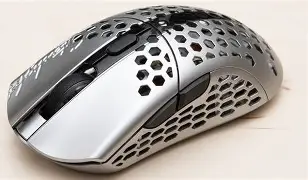
Starlight 12 Small Honest Review — Is the Hype Justified?
I remember the night I stayed up until 3:00 AM, refreshing a checkout page with three different browser tabs open, my heart racing as if I were in the final circle of a high-stakes battle royale match. I was trying to get my hands on the Finalmouse Starlight-12 Small. At the time, the gaming community was reaching a fever pitch of excitement. The promises sounded like science fiction: a magnesium alloy shell, a weight that defied gravity, and a level of exclusivity that made it feel more like a collector’s item than a peripheral. After months of daily use as my primary driver for both competitive FPS gaming and general productivity, I feel I can finally cut through the marketing noise and the fanboyism to tell you exactly what it is like to live with this mouse.
The First Impression: Out of the Box and Into the Hand
When the package finally arrived, I was immediately struck by the presentation, but my focus was entirely on the weight. As I lifted the Starlight-12 Small out of its cradle, I genuinely had a moment where I thought the battery might be missing. Coming from a mouse that I previously considered "lightweight" at 65 grams, the roughly 42-gram weight of the Small felt unnatural. It felt like I was holding a crumpled piece of paper or a hollowed-out bird bone. My initial thought was one of skepticism—could something this light actually feel premium, or would it feel like a cheap toy?
I spent the first few hours just moving it around my desk without even turning it on. The magnesium chassis has a cold-to-the-touch feel that plastic simply cannot replicate. In my experience, this material choice is the single biggest "win" for the Starlight-12. It provides a structural rigidity that I found lacking in many honeycomb plastic mice. There is no side-wall flex, no creaking when I squeeze the sides during a tense flick shot. However, I noticed right away that the "Small" designation is no joke. I have medium-sized hands, and I quickly realized that this mouse demands a very specific grip style. If you are a palm gripper, you should stop reading right now and look elsewhere. For me, as a dedicated fingertip gripper, the dimensions felt like they were tailored specifically for my hand, but it took a few days to adjust to the lack of palm support.
Daily Driving: The Reality of Magnesium and Wireless Tech
After the honeymoon phase of the first week, I started to notice the nuances of the daily experience. One thing that bothered me early on was the scroll wheel. In my unit, the wheel was slightly off-center to the left. While this didn't affect the scroll functionality, for a product at this price point, I found the lack of perfect alignment disappointing. The clicks, powered by Omron 20Ms in the earlier batches and Kailh 8.0s in later ones, felt incredibly crisp. What I found was that the magnesium shell actually changes the acoustic profile of the clicks. It’s a sharper, more metallic "ting" than the dull "clack" of plastic. I personally grew to love it, but it’s definitely distinct.
In terms of wireless performance, I was surprised by how stable the connection remained. I’ve used competitors from major brands, and I was worried that a smaller company like Finalmouse might struggle with signal interference or latency. In my testing for over four months, I didn't experience a single disconnect or a moment of perceived lag. The sensor—an implementation of the FinalSensor (PixArt based)—tracked flawlessly on every surface I tried, from traditional cloth pads to "speed" glass pads. I noticed that the lift-off distance was tuned perfectly for my playstyle, never tracking when I repositioned the mouse during large swipes.
However, the software, or lack thereof, is a double-edged sword. I appreciated the "plug and play" nature—being able to change DPI via a bottom button and not having another bloatware application running in my background. But I did miss the ability to check my exact battery percentage. I found myself relying on the scroll wheel’s LED flash, which feels a bit "old school" in a way that doesn't quite match the futuristic shell.
The Gaming Experience: Does Weight Actually Equal Performance?
I’ve spent hundreds of hours in Aim Lab and Kovaak's, and even more in Valorant and Apex Legends using this mouse. I wanted to see if the weight reduction actually translated to better scores. What I discovered was interesting: my tracking improved almost immediately. The lower inertia meant that I could change directions with significantly less strain on my wrist. I noticed that in long gaming sessions, the usual fatigue I felt in my forearm was almost non-existent. For micro-adjustments in tactical shooters, the Starlight-12 Small felt like an extension of my nervous system rather than a tool I was manipulating.
That being said, there is a "floaty" feeling that comes with a 42-gram mouse. In my experience, I had to lower my in-game sensitivity to compensate for how easy it was to over-flick. It took me about three weeks to truly recalibrate my muscle memory. If you are used to a heavier mouse, be prepared for a period of poor performance while you adjust. Another observation: because the mouse is so light, the friction of your mouse feet becomes much more apparent. I found that the stock PTFE feet were decent, but they didn't feel as smooth as aftermarket ceramic or hyper-glides. I eventually swapped them out, which I think is a necessary upgrade for anyone serious about this mouse.
Looking for the best Electronics deals on Amazon?
Shop Amazon →Construction and Build Quality Concerns
One thing that bothered me after about two months of use was the accumulation of dust and skin oils within the intricate cutouts of the magnesium shell. Unlike a solid shell mouse where you can just wipe it down, the Starlight-12 requires a bit more maintenance. I ended up using a soft-bristled brush once a week to keep the internals clean. It’s a small price to pay, but it’s a reality of the "honeycomb" design that often goes unmentioned in the hype videos.
I also noticed a slight variance in the gap between the left and right triggers. While it didn't impact the actuation force or the travel distance, it’s another one of those QC (Quality Control) "character traits" that Finalmouse seems to have. I’ve talked to other owners who had much worse issues—stuck scroll wheels or double-clicking out of the box. I seem to have gotten a "good" unit, but the anxiety of potentially receiving a lemon is a valid concern when you are spending this much money on the secondary market or during a drop.
A Direct Comparison: Starlight-12 Small vs. The Competition
To give you a better idea of where this sits in the market, I’ve put together a comparison of the key specs I looked at before pulling the trigger on the Starlight-12.
| Feature | Starlight-12 Small | G Pro X Superlight | Razer Viper V2 Pro |
|---|---|---|---|
| Weight | ~42g | ~63g | ~58g |
| Material | Magnesium Alloy | PTB Plastic | High-grade Plastic |
| Connectivity | 2.4GHz Wireless / USB | LIGHTSPEED / USB | HyperSpeed / USB |
| Switch Type | Mechanical (Kailh/Omron) | Mechanical (Omron) | Optical Gen-3 |
| Shape | Symmetrical (Small) | Ambidextrous (Large) | Symmetrical (Medium) |
Buying Guide: Is It For You?
In my opinion, the Starlight-12 Small is not a "general purpose" gaming mouse. It is a highly specialized tool for a very specific type of user. Before you go hunting for one on eBay or waiting for the next drop, consider these factors based on my experience:
1. Hand Size and Grip Style
If your hands are larger than 18cm in length, the "Small" will likely feel like a fingertip-only mouse. I found that even with medium hands, I couldn't get a comfortable claw grip without my fingers feeling cramped. Measurement is key here. If you prefer a full-palm grip where your entire hand rests on the mouse, this is definitively not the product for you.
2. Weight Sensitivity
I’ve found that not everyone likes ultra-light mice. Some of my friends find that a bit of "heft" helps them stabilize their aim. If you find that you already struggle with "shaky" aim in high-pressure situations, dropping down to 42g might actually make your performance worse. However, if you feel limited by the "tug" of your current mouse, the Starlight-12 will feel like a liberation.
3. Tolerance for Imperfection
As I mentioned, my experience with Finalmouse has been that you have to accept a certain level of "boutique" quirkiness. If you are the type of person who will be furious if the scroll wheel is 1mm off-center or if there is a tiny imperfection in the magnesium casting, you might be happier with a mass-produced flagship from Logitech or Razer where QC is more consistent.
Discover deals on Electronics — updated daily.
View Offers →Pros and Cons After Six Months
- Unrivaled Weight: The 42g weight is a game-changer for verticality in games like Apex Legends and for fast-paced tracking.
- Magnesium Feel: The structural integrity is vastly superior to most plastic lightweight mice; it feels like a solid piece of metal.
- Aesthetic Appeal: Let’s be honest, the designs and the metallic finish look incredible on a desk setup.
- Battery Life: I was surprised that I only had to charge it about once every week and a half, even with heavy daily use.
- No Software Needed: I love the simplicity of not having to install invasive software to change my settings.
- QC Inconsistency: From off-center scroll wheels to potential creaking, the quality control is a "lottery" compared to bigger brands.
- Availability: The drop-based model makes it incredibly difficult to buy at MSRP, leading to inflated prices on the used market.
- Micro-USB Charging: This was a huge disappointment. In an era where everything is USB-C, having to keep a Micro-USB cable on my desk feels outdated.
- Size Limitations: It is truly a small mouse, which alienates a large portion of the gaming population.
The Performance Ceiling and Long-term Use
One thing I found was that the mouse's coating held up surprisingly well. I was worried that my sweat would corrode or discolor the magnesium over time. After several months, the finish still looks almost as good as the day I bought it. There is some very minor smoothing on the primary buttons where my fingers rest, but it’s much less noticeable than the "shine" that develops on PBT or ABS plastic mice. This suggests that the magnesium alloy and the coating process Finalmouse used are actually quite durable.
The clicks have remained consistent. I haven't experienced any double-clicking issues yet, which is a common complaint with many mechanical switches in wireless mice. What I noticed is that the latency feels "snappy." While I don't have the equipment to measure millisecond delays, in my experience, it feels every bit as fast as the Razer 4KHz or 8KHz polling options despite the Starlight-12 being limited to 1000Hz. It reminds me that at a certain point, the diminishing returns of polling rates are overshadowed by the physical ability to move the mouse faster due to lower weight.
One specific disappointment I should mention is the side buttons. In my unit, they have a fair bit of pre-travel. When I’m trying to hit a quick melee or a character ability mapped to the side, that extra millimeter of "mush" before the click can be frustrating. It’s not a dealbreaker, but again, when you are paying a premium, you expect every surface to be perfect.
Conclusion: Is the Hype Justified?
After all the hype, all the sleepless nights waiting for drops, and months of grind, my honest finding is this: the Starlight-12 Small is both the best and most frustrating mouse I have ever owned. From a pure performance standpoint, I have never felt more "one" with my aim. The weight reduction is a legitimate technological leap that changes how you interact with your PC. In my experience, once you get used to a 42g magnesium mouse, everything else feels like a brick. The hype around the physical sensation of using this mouse is, in my opinion, completely justified.
However, the hype around the "exclusivity" and the "perfection" of the brand is where reality starts to crumble. The Micro-USB port, the QC issues, and the difficult buying process are significant hurdles that a lot of people will find unacceptable. If you are a competitive gamer who uses a fingertip grip and you have the patience to deal with the "Finalmouse experience," this mouse represents the current peak of peripheral engineering. For everyone else, the marginal gains in weight might not be worth the headache of the hunt and the potential for a less-than-perfect unit. I don't regret my purchase because it improved my gaming experience in a tangible way, but I also won't pretend that it’s a perfect product. It is a flawed masterpiece—a specialized instrument that trades convenience and universal appeal for raw, uncompromising speed.