The Real Truth: Anker Nebula X1 or Samsung Hw Q990F?
Introduction
When building an audiovisual setup, buyers often face a familiar crossroads: invest in a compact, flexible projector system or commit to a purpose-built audio solution that transforms the listening experience. The Anker Nebula X1 and the Samsung HW-Q990F represent two very different approaches to improving home entertainment. One prioritizes portability, visual convenience, and an all-in-one package; the other prioritizes immersive sound, dedicated audio hardware, and cinematic presence.
This article compares these two products across real-world use cases—movie nights, sports, gaming, and casual streaming—so buyers can make an informed decision about which fits their priorities. The goal is not to crown an absolute “winner,” but to explain where each device shines, where it compromises, and how typical buyers should weigh trade-offs like room size, content type, and long-term flexibility.
Overview of the Products
Anker Nebula X1 — What it aims to be
The Anker Nebula X1 is positioned as a compact smart projector offering an easy way to get a large-screen experience without the permanence of a TV. It combines a projection engine, streaming platform, and onboard speakers into a single chassis. The appeal is obvious: a portable device that can move from living room to bedroom, set up quickly for an outdoor movie night, or provide a temporary large display for presentations.

In real-world terms, Nebula-class projectors are typically chosen by buyers who value flexibility: renters who cannot mount a large TV, families who want a movie-night projector for the backyard, and minimalists who prefer a single multi-purpose unit. Expect straightforward smart features, battery or compact power options on some models, and a design that emphasizes convenience over hardcore calibration.
Samsung HW-Q990F — What it aims to be
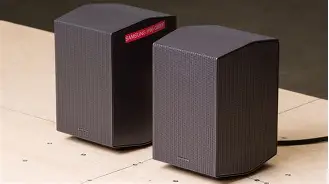
The Samsung HW-Q990F is a flagship-level soundbar system designed to deliver a full, room-filling cinematic soundstage. It is a multi-component solution with a main soundbar, a dedicated subwoofer, and wireless rear speakers, engineered to reproduce immersive formats like Dolby Atmos and DTS:X. Samsung markets this class of soundbars at buyers who want a step-up from TV speakers without installing a multi-speaker home theater system.
Typical owners of the HW-Q990F are homeowners seeking dramatic improvements in clarity, impact, and immersion: people who watch films critically, gamers who demand positional audio, and anyone who finds built-in TV speakers inadequate. This product is about audio excellence rather than a display; it presumes a display device already exists or will be paired by the buyer.
Detailed Product Analysis
Image and Projection Experience: Anker Nebula X1
As a projector, the Nebula X1’s most important attributes are brightness, contrast, color handling, and convenience features like auto-keystone or autofocus. In everyday use, projectors contend with ambient light and surface quality. Buyers using the Nebula X1 in a darkened living room or dedicated home-theater room will find the large image size, cinematic scale, and adaptability appealing. For casual late-night viewing or weekend movie marathons, the projector makes a strong case.
However, in rooms with moderate to high ambient light (living rooms with windows or daytime use), even compact projectors can look washed out compared with a modern LED/LCD/OLED TV. The Nebula X1 is best suited to environments where the projector can be used in low-light conditions or with a proper projection screen designed to preserve contrast.
Another practical consideration is placement. Portable projectors enable flexible positioning but require care with throw distance and alignment. Auto-correction features make setup easier, but moving the device frequently can introduce inconsistent calibration. For buyers prioritizing a consistently excellent picture at any hour of day, a dedicated TV still often wins; for buyers prioritizing size and portability, the Nebula X1 is compelling.
Looking for the best TVs & Home Theater deals on Amazon?
Browse Now →Sound and Immersion: Samsung HW-Q990F
Soundbars like the HW-Q990F are judged on clarity, imaging, low-frequency impact, and how convincingly they render height and surround cues. In real-world viewing, the difference between TV speakers and a well-designed soundbar is dramatic: dialogue becomes clearer, movie soundtracks open up, and action scenes feel visceral. The HW-Q990F’s multi-speaker configuration and subwoofer deliver room-shaking bass and a sense of envelopment that small TV speakers cannot match.
For gamers, the improved positional audio helps with situational awareness. For movie lovers, Atmos and object-based mixes can reveal vertical effects such as overhead rain or helicopter flyovers. The trade-offs are common: the best soundbars require space for a subwoofer and the wireless rear modules, and they are more complex to place optimally than a single TV sound bar. Nevertheless, for buyers whose primary goal is superior sound, the HW-Q990F is a more reliable and long-term solution than relying on projector speakers or TV audio.
Integration and Usability
Integration matters when pairing devices. The Nebula X1 is self-contained: with onboard streaming apps or casting, it eliminates the need for a separate media player. That convenience is attractive for non-technical users or multi-space use. Sound quality from most projector-integrated speakers is modest, and many Nebula users plan to add an external audio system for better sound.
The HW-Q990F pairs with TVs via HDMI (with eARC/ARC when available), optical, or wireless connections. It integrates particularly well with Samsung TVs through features like synchronized audio modes on compatible sets—this can make the system feel like an extension of the TV rather than a separate accessory. However, the HW-Q990F assumes a display exists; it is not a visual solution.
Pros & Cons
Anker Nebula X1 — Pros
- Portability: Easy to move between rooms or take outdoors, useful for flexible viewing locations.
- All-in-one convenience: Combines display and smart streaming features without needing multiple devices.
- Large image potential: Creates a true big-screen experience in spaces where a TV would be impractical.
- Space-saving: Ideal for renters or small apartments where wall mounting a TV is undesirable.
- Good for casual gatherings: Backyard movie nights and presentations are simpler with a compact projector.
Anker Nebula X1 — Cons
- Brightness limitations: Image quality degrades in well-lit rooms unless paired with a high-gain screen or darkened environment.
- Audio compromises: Built-in speakers are usually inadequate for cinematic sound; an external sound system is recommended.
- Setup variability: Throw distance, keystone, and focus can require adjustments that reduce plug-and-play simplicity.
- Longevity of image quality: LED or laser sources are durable, but color and brightness characteristics may still lag behind premium TVs.
Samsung HW-Q990F — Pros
- Immersive audio: Delivers richer, fuller sound and better dynamics than TV speakers or integrated projector audio.
- Dedicated subwoofer and rear speakers: Real bass and spatial effects for movies and music.
- Compatibility: Works well with modern TVs via HDMI eARC for high-bandwidth, low-latency audio.
- Upgrade path: Can be paired with other components and calibrated to different room acoustics for better results.
- Ease of use once installed: After placement and calibration, it typically requires minimal daily interaction.
Samsung HW-Q990F — Cons
- Cost and footprint: Higher price and need for physical space for subwoofer and rear satellites.
- Installation complexity: Placement and calibration of multiple pieces take more effort than an all-in-one solution.
- Display dependency: It must be paired with a TV or projector for a complete AV experience.
- Room sensitivity: Acoustic characteristics of the room significantly affect perceived performance.
Comparison Table
| Attribute | Anker Nebula X1 | Samsung HW-Q990F |
|---|---|---|
| Primary purpose | Portable projection and smart streaming | High-end immersive audio |
| Best for | Flexible viewing, temporary setups, outdoor use | Home theater audio, music, gaming |
| Portability | High — designed to move | Low — multiple components, heavier |
| Sound quality (out of the box) | Functional but limited; external audio recommended | Excellent; designed for superior clarity and bass |
| Setup complexity | Simple for a basic setup; tweaks required for optimal image | Moderate to advanced — placement and calibration matter |
| Room suitability | Dark/controlled lighting rooms or screens preferred | Any room, though acoustics affect results |
| Smart features | Onboard streaming apps and casting | Remote and integration with TV smart features; audio-centric |
| Recommended complement | Soundbar or external speakers for improved audio | Large screen or projector for visual complement |
Buying Guide: How to Choose Between Them
1. Define the primary use case
Buyers should start by identifying the most frequent use. If the goal is a dramatic improvement in sound for an existing TV—dialogue clarity, a sense of surround for films, or better gaming audio—the HW-Q990F is oriented for that. If the goal is to create a large, portable screen for movies, presentations, or outdoor events, the Nebula X1 is the natural choice.
2. Consider room lighting and size
Projectors are most convincing in low-light environments. If the living area has controllable lighting or a dedicated dark room, a projector will deliver a memorable cinema-like image. In bright family rooms or multipurpose spaces, a TV plus a soundbar often produces more consistent results. Also consider seating distance: projectors excel at creating huge images for large rooms; soundbars need space for the subwoofer and rear speakers to breathe.
3. Prioritize audio or visual fidelity
If audio fidelity is paramount—heavy movie watching, serious music listening, or competitive gaming—investing in the HW-Q990F or similar dedicated audio gear will yield a higher return. Conversely, if visual scale and portability are the priority, the Nebula X1 provides benefits that even a high-end sound system cannot deliver on its own.
4. Think about integration and future upgrades
Projector buyers should plan for an external audio path: adding a soundbar or AV receiver later will improve the overall system. Soundbar buyers should ensure the selected unit has modern connectivity (HDMI eARC, low-latency modes) to remain compatible with future TVs and game consoles.
5. Assess setup tolerance and aesthetics
Those who prefer a tidy, low-maintenance setup may prefer a soundbar that can sit or mount near the TV. People comfortable with occasional adjustments, or who value the novelty of moving the projector around, will appreciate the Nebula X1. Also consider the visual footprint: a projector can be tucked away when not in use; a soundbar and subwoofer remain part of the room.
Shop the latest TVs & Home Theater picks on Amazon.
Browse Now →6. Budget realistically
While the projector may appear less costly than a flagship sound system initially, the total cost can increase once a screen, dedicated speakers, or calibration services are added. Similarly, a high-end soundbar is an investment in long-term audio quality; buyers should factor in potential TV upgrades or AV accessories to create the best experience.
7. Practical tips for pairing them
- If choosing the Nebula X1: plan to pair it with an external sound solution—either a compact soundbar or Bluetooth speakers—if cinematic audio matters.
- If choosing the HW-Q990F: pair with a high-quality display or use with the projector for a true home-theater setup; ensure HDMI eARC compatibility for the best audio formats.
- Calibration matters: for both devices, spend a bit of time adjusting placement and room settings; small changes in speaker or projector position yield big perceptual improvements.
- Test with owned content: sample familiar movies, TV shows, and games to evaluate performance under everyday conditions rather than relying on demos or store impressions.
Real-World Use Cases
Family movie nights
For families who want regular, large-scale movie nights, the Nebula X1 creates the “big screen” feeling and allows flexible seating arrangements. However, pairing it with a soundbar will prevent thin or distant-sounding audio during dialogue-heavy scenes.
Living room cinema for film buffs
Film enthusiasts who prioritize audio fidelity and nuanced soundtracks will likely favor the HW-Q990F. Its spatial capabilities enhance ambience and make classic and modern cinema mixes come alive. Combining the HW-Q990F with a high-contrast display or projector yields the closest experience to a small commercial theater.
Gaming and fast-paced content
Gamers need low input lag and crisp audio cues. If gaming is the primary use, verify projector latency numbers before committing to the Nebula X1; many acceptably low-latency projectors exist, but they vary. The HW-Q990F improves positional audio, which can be decisive in competitive play.
Portable presentations and outdoor events
The Nebula X1 excels for business presentations, vacation rentals, or portable outdoor movie nights where hauling a TV is impossible. The convenience of an all-in-one projector shines when mobility and quick setup are priorities.
Conclusion
Choosing between the Anker Nebula X1 and the Samsung HW-Q990F comes down to priorities. The Nebula X1 is a smart, portable projector built for flexibility and scale: it gives viewers a cinematic image in places where a fixed TV would be impractical, but it trades off native audio quality and consistent brightness in well-lit environments. The Samsung HW-Q990F is an audio-first solution that transforms listening into a cinematic event, but it depends on an existing display and a commitment to dedicated placement.
For those who want a single, mobile device that creates a large picture for casual viewing and gatherings, the Nebula X1 is the more appropriate choice. For those who seek the best possible sound without reconstructing a full multi-speaker home theater, the HW-Q990F is the more direct path to audio excellence. Many buyers will ultimately benefit from both approaches: pairing a projector for visuals with a high-quality soundbar for audio creates a balanced, immersive home-theater experience that no single device can perfectly accomplish on its own.
In short, prioritize the Nebula X1 for flexibility and screen size, and prioritize the HW-Q990F for immersive, long-term audio performance—then choose the combination that best fits the room, the content that matters most, and how much time the household is willing to spend on setup and calibration.